
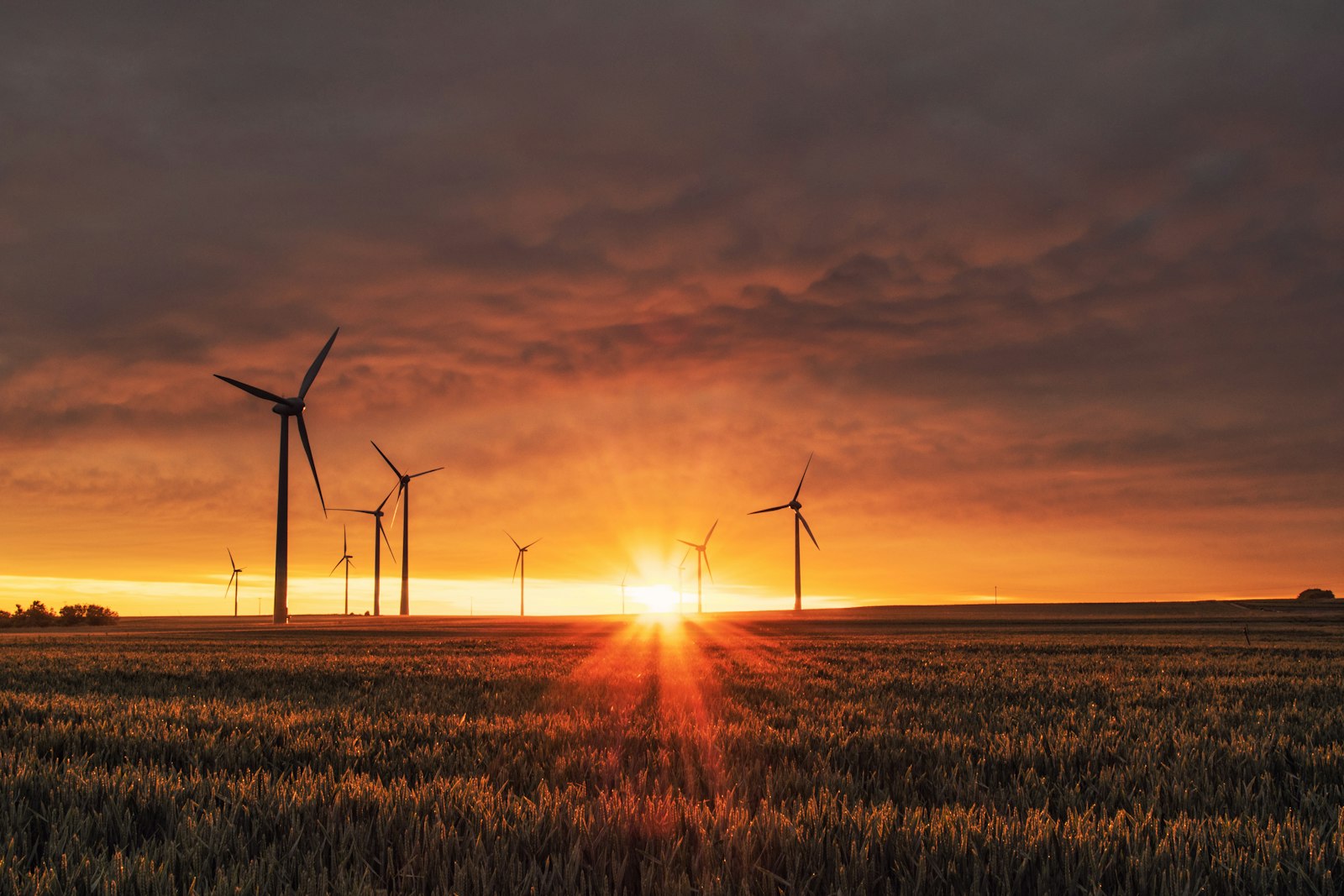
Wind resource assessment is where wind projects are made or broken. A project that assumes 38% capacity factor and delivers 33% isn't just disappointing — it's a covenant default. The difference between those two numbers is frequently just methodology.
The two-year rule
Bankable wind resource assessment requires at least 12 months — preferably 24+ — of on-site measurement. One year captures seasonal variation. Two years helps distinguish inter-annual variability (some years are simply windier) from long-term climatology. Lenders and independent engineers won't underwrite a project on less.
Modern practice uses a combination of measurement tools: a traditional meteorological tower (met tower) at 80–100m height, remote-sensing devices (LIDAR or SoDAR) that measure wind speed at turbine hub height, and long-term reference data (reanalysis datasets or nearby airports) to correct for the measurement period.
The Measure-Correlate-Predict (MCP) workflow
MCP is the standard methodology: measure on-site for a discrete period, correlate those measurements with a long-term reference dataset from a nearby location, and predict long-term wind characteristics at the site by applying the correlation to the long-term record.
MCP quality depends on three things: how well the short-term measurements represent wind conditions (at turbine hub height, across the site), how correlated the reference data actually is to the site, and how representative the long-term record is of future conditions.
Wake losses and array effects
Individual turbines affect each other. Wake losses — where turbines downstream of others see reduced wind speed — can be 5–15% of gross energy for dense arrays. Modern micrositing software (WindFarmer, openWind, wind-specific OpenFOAM variants) models wake effects across the array and informs turbine layout.
Trade-off: tighter spacing increases wake losses but reduces transmission and foundation costs. Wider spacing reduces wake losses but extends collection systems. Optimizing this trade-off at the resource-assessment stage is more valuable than re-litigating it during design.
Climate change and the long-term trend
Wind resource data going back 30 years may no longer represent future conditions. Some regions are becoming less windy (the U.S. Great Plains have shown modest declines in mean wind speed over 20 years); others are becoming windier. This matters for 20-year project economics.
Responsible resource assessments now include climate-change sensitivity analysis. It doesn't change underwriting in most cases, but it does inform the hedging strategy.
The Axis view
Cutting resource-assessment budgets to save time or money is the most expensive form of false economy in wind development. A project that delivers 95% of projected generation pencils. A project that delivers 85% is in default. The difference is often just a few tens of thousands of dollars of additional measurement and analysis spent early.
Looking at a Wind project?
We connect developers with financing, technology partners, and EPCs worldwide.
Start a conversation