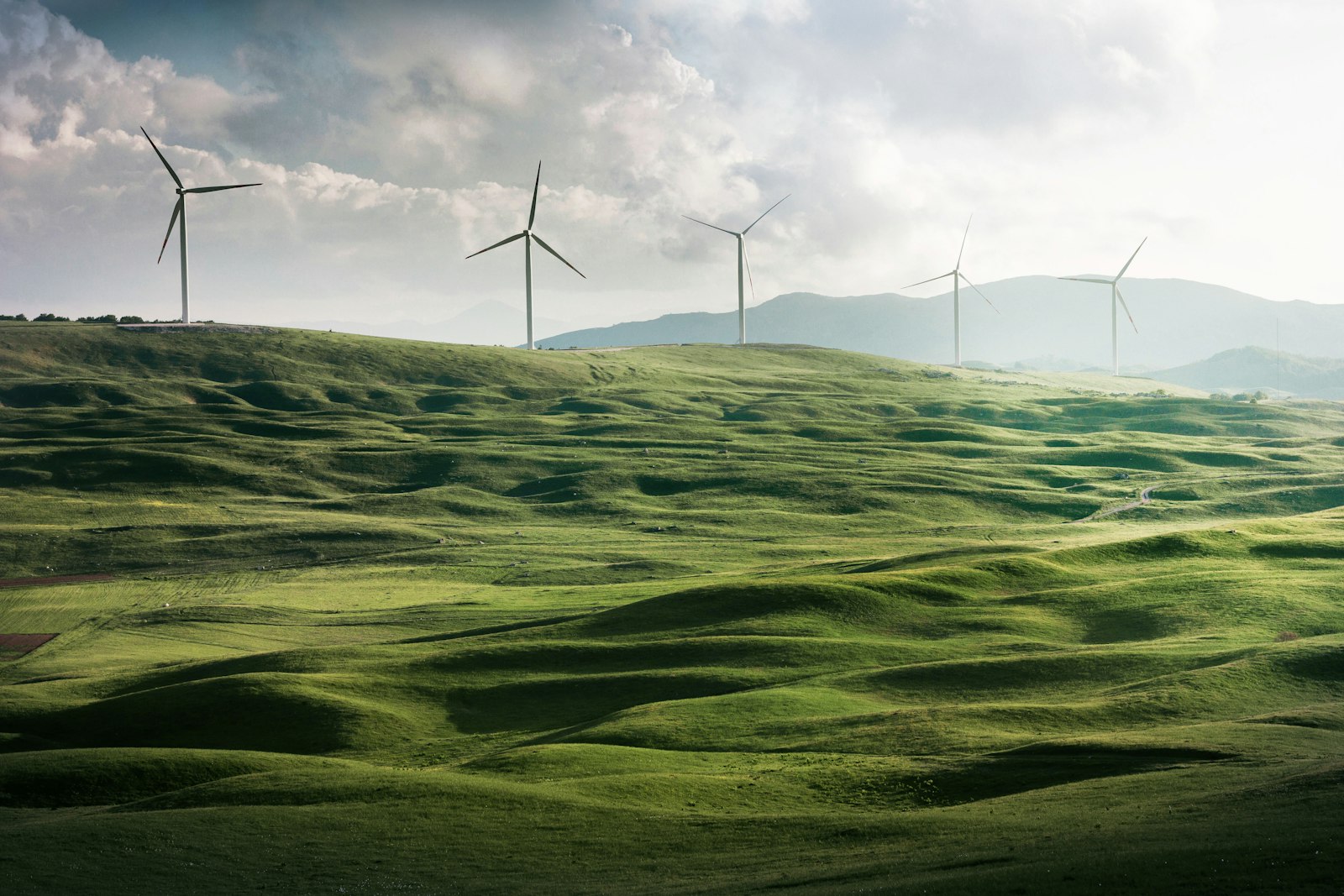
Distributed wind has been a quiet segment of the US renewable energy landscape. Utility-scale gets the headlines; residential solar gets the consumer attention. Distributed wind — turbines in the 100 kW to 10 MW range sited on industrial, agricultural, or institutional properties — has a specific economic sweet spot that works for the right host.
When it makes sense
Three conditions need to align:
- Strong on-site wind resource. Mean wind speeds above 6.5 m/s at hub height. Most of the US Great Plains qualifies; much of the East Coast does not without offshore or ridge-top siting.
- Large, steady industrial load. Manufacturing facilities, water treatment plants, agricultural operations, and data centers with 24/7 loads are the natural hosts. Daytime-only loads (schools, offices) don't capture wind's overnight generation profile efficiently.
- Retail electricity rates above 8 cents/kWh. Wind LCOE for distributed turbines is 5–8 cents/kWh depending on site. There has to be spread to retail rates to create economic value.
The tax and incentive landscape
Distributed wind benefits from the same PTC/ITC mechanics as utility-scale, but small-project overhead is relatively high. The IRA included specific provisions for smaller projects (under 5 MW) including a 10% domestic content adder for using US-manufactured turbines.
USDA's REAP program offers grants for agricultural hosts. Several states (Minnesota, Iowa, Oklahoma) have distributed wind-specific incentive tariffs.
Manufacturer landscape
The distributed wind turbine market is much thinner than utility-scale. Major players include Northern Power Systems, XANT (Belgium), and Bergey (residential-through-small-commercial). Some utility-scale turbine manufacturers don't offer models below 2 MW anymore.
For projects in the 100–500 kW range, turbine availability and long-term service support are real concerns. Longer-term, the consolidation trend in turbine manufacturing is squeezing this segment.
The Axis view
Distributed wind works for a narrow but valuable set of host profiles — large industrial, agricultural co-op, water/wastewater. Host acquisition is the bottleneck, not engineering. Developers successful in this segment typically have vertical expertise (agriculture, food processing, mining) that lets them build host relationships outside the traditional developer networks.
Looking at a Wind project?
We connect developers with financing, technology partners, and EPCs worldwide.
Start a conversation